
Key Takeaways:
- Agree on what the show is for before you book the booth.
- Spend less on swag and more on experience.
- Strict industry rules still leave room to stand out.
- Some results take months. Say so up front.
We’ve watched a company spend nearly $100,000 on one trade show. Between the booth, sponsorship, and travel, they were expecting a major return on the investment.
Months later, nobody could connect it to a single new client. Leadership called the whole thing a distraction and decided to axe events in next year’s budget.
But the booth wasn’t the problem. The plan was.
Most trade show money goes to the wrong places. Floor space alone takes about 40% of the budget, according to CEIR. The rest usually goes to pens, a pricey sponsorship package, and flying out a sales team that’s told, “just do your thing.”
If you’re a fractional CMO, you’re probably running this alone or with a tiny team. Here’s what works, pulled from episode 10 of the Atlas Rose Podcast with event pro and Atlas Rose Leadership Partner Jill Goodwin-Helgerson.
Decide What the Show Is For First
Before anyone signs a booth contract, sit down with the CEO and the sales lead. Agree on what you’ll measure:
- Meetings booked before the show
- Current customers you see in person
- Follow-ups sent within a week
Then say the hard part out loud: Creating a trade show experience is a long-game. If you set expectations and get on the same page before the show, it’s a plan. If you say it after, it sounds like an excuse.
That means you need to get sales in the room early. Your sales team might be great on calls, at lunches, and in product demos, but a booth is a different game. Jill compares the show floor to a Vegas casino: loud, bright, and overwhelming. Bigger isn’t always better, either. A huge, flashy booth can scare people off, and they’ll walk right past. Walk your sales team through the plan well before the show so they know what you’re trying to achieve, how to bring people in, and ways to meet prospects where they’re at.
Put the Money Into Experience
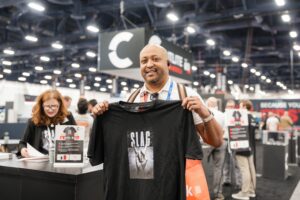 Make a T-shirt people actually want. Design a shirt so good they wear it on the weekend, and keep the logo small. We’ve done a T-shirt of the year for a few years now with an Atlas Rose client, and people now come to our booth asking for it.
Treat customers like VIPs in front of prospects. When a customer walks up, stop everything. Take a picture. Hand them a gift. Your customers feel proud and your prospects want in.
Skip the sponsorship package. We never buy them. Walk the venue instead and look for the gaps the show didn’t think to sell.
Upgrade the meeting room. Most shows offer what Jill calls a “tidy little white box.” A nicer room down the hall often costs less and feels a lot better.
Train your team with the experience. Skip the write-up the morning of the show. Give booth staff the experience you want them to deliver. That’s how Disney trains its cast members.
Stand Out When the Rules Are Strict
Jill does a lot of her event work in healthcare. Gifts to doctors have to cost less than $10, and everything in the booth has to be educational. She still finds ways to stand out.
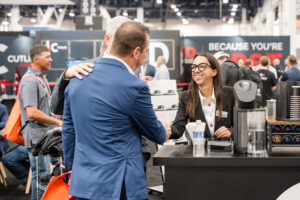 Hand out a golden ticket. Invite your best prospects to a small, private event, and make a big deal of it at the booth. No gift rules broken, and everyone nearby wants one.
Let the experts be the draw. Jill’s team asked respected doctors what they’d tell their younger selves and showed the quotes on a big screen. Doctors waited 10 minutes to snap a picture with their own quote.
Make it feel like a living room. Swap the conference table for couches, good food, and groups of three or four. People open up.
When Leadership Asks “Was It Worth It?”
Pull out the list you agreed on before the show. Show the meetings, the customer visits, and the follow-ups. Then show the slower signs: repeat visitors, customers who brought a colleague, and prospects who mention the booth on a sales call.
Those slower signs add up. Jill shared an impressive example in episode 10:
While working with a mid-sized eye care company and one of the industry’s biggest events, the show’s foundation started raising money for cataract surgeries for people who couldn’t afford them. Jill’s client didn’t even make cataract products, but they ran the sign-ups from their booth anyway.
They did it for five years, increasing donations every year. It didn’t sell products on the spot, but when the company was acquired by Alcon, a global leader in eye care, Jill says that their brand community is what put them on Alcon’s radar.
That’s what we mean by the marketing long-game.
Build the Plan Before You Need It
This plan-first approach is how we teach fractional CMOs to work, at trade shows and everywhere else. It’s at the core of the Atlas Rose Ascent, our 90-day program for experienced marketers building a fractional practice. Jill is in the current cohort. If you want a proven system behind your practice, book a discovery call.